Community
Community
NEWS
총 2602건의 게시물이 있습니다.
There are a total of 2602 posts.
-
News
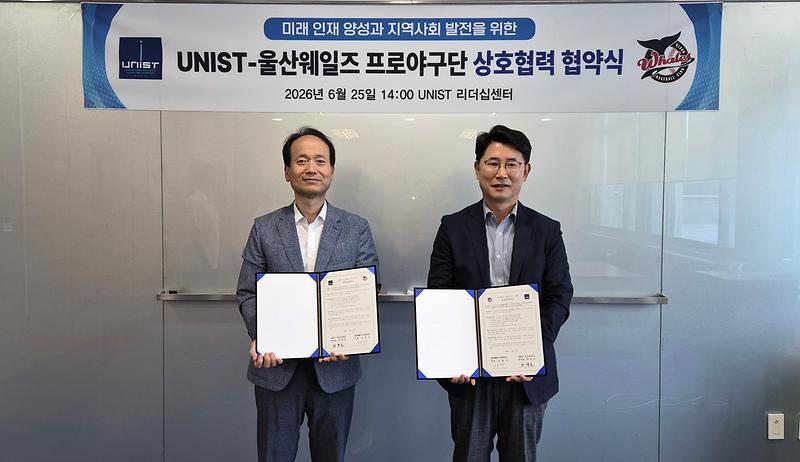
UNIST Partners with Ulsan Whales to Give Students Hands-On Experience in the Sports IndustryCollaboration will create new opportunities in sports operations, rehabilitation, and community engagement.JooHyeon HeoUNIST is partnering with the Ulsan Whales professional baseball club to provide students with practical learning opportunities beyond the classroom. On June 25, UNIST Leadership Center signed a Memorandum of Understanding with the Ulsan Whales, will introduce programs that allow students to experience different aspects of the sports industry, including game operations, sports rehabilitation, and club marketing. The two organizations also plan to collaborate on home game activities and other experiential learning programs. The partnership reflects the Leadership Center's broader effort to connect students with real-world learning opportunities through local organizations. By combining education with community engagement, the initiative aims to help students develop practical skills while strengthening ties between the university and the region. “This partnership gives students the opportunity to experience the sports industry firsthand while learning beyond the classroom,” a representative from the UNIST Leadership Center said. “We will continue working with local partners to create meaningful programs that broaden students’ experiences.” Dong Jin Kim, General Manager of the Ulsan Whales, welcomed the partnership, describing it as an opportunity for both organizations to grow together while contributing to the local community. Founded earlier this year, the Ulsan Whales is the first Korea Baseball Organization (KBO) club established through a local government initiative. The team competes in the KBO Futures League and is based at Ulsan Munsu Baseball Stadium.- 2026.06.26
- 4108
-
Community
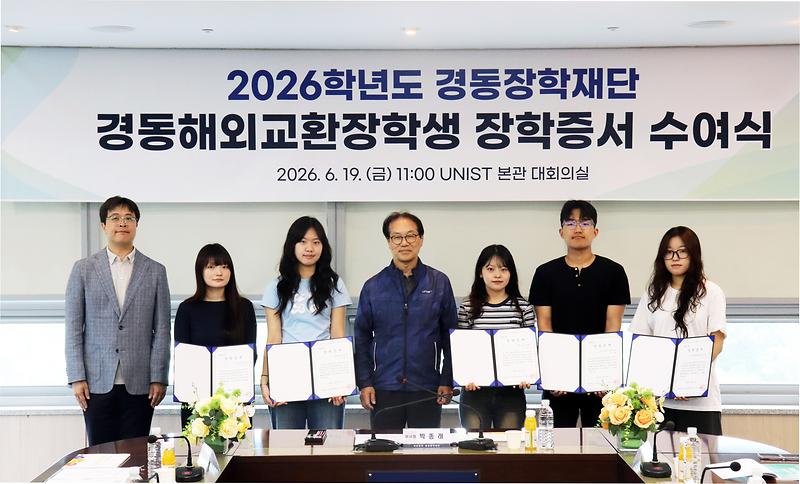
Five UNIST Students Recognized with 2026 Kyungdong Scholarship AwardsThe 2026 Kyungdong Overseas Exchange Scholarship Awards Presentation Ceremony took place on June 19, 2026.JooHyeon HeoFive UNIST students will study at leading universities in Europe and Singapore this fall with support from the Kyungdong Scholarship Foundation, which awarded KRW 40 million in overseas exchange scholarships during a ceremony on June 19, 2026. Among this year's recipients is JiNa Kim from the Department of Biomedical Engineering. Each student will receive KRW 8 million in support, for a total of KRW 40 million provided by the foundation. The students will spend the fall semester at the University of Twente in the Netherlands, Chalmers University of Technology in Sweden, INSA Lyon in France, and the Singapore University of Technology and Design (SUTD). Since launching the program in 2023, the Kyungdong Scholarship Foundation has supported UNIST students in gaining international academic and cultural experience through overseas exchange opportunities. The ceremony also welcomed recipients from the 2025 scholarship cohort, who shared their experiences studying, conducting research, and adapting to life abroad while offering practical advice to this year's students. In his congratulatory remarks, Chairman Chong Rae Park of the Kyungdong Scholarship Foundation and President of UNIST, encouraged the students to view their exchange programs as an opportunity to broaden their perspectives and grow both academically and personally. “Studying abroad is more than an academic experience—it is an opportunity to discover new perspectives and reflect on the future you want to build,” Park said. “I hope this journey becomes a meaningful chapter in your life and inspires you to pursue your goals with confidence.” SuAe Lee from the Department of Design, one of this year's scholarship recipients, said hearing from previous participants helped transform what had once felt like an abstract opportunity into something she could actively prepare for. “Their experiences gave me a much clearer picture of what to expect,” she said. “I'm grateful to the Kyungdong Scholarship Foundation for giving me the opportunity to learn in a new environment, meet people from different backgrounds, and broaden both my academic perspective and global outlook.” The Kyungdong Scholarship Foundation will continue supporting scholarships and overseas exchange opportunities that help UNIST students gain international experience and prepare for careers in an increasingly interconnected world.- 2026.06.26
- 2933
-
Community
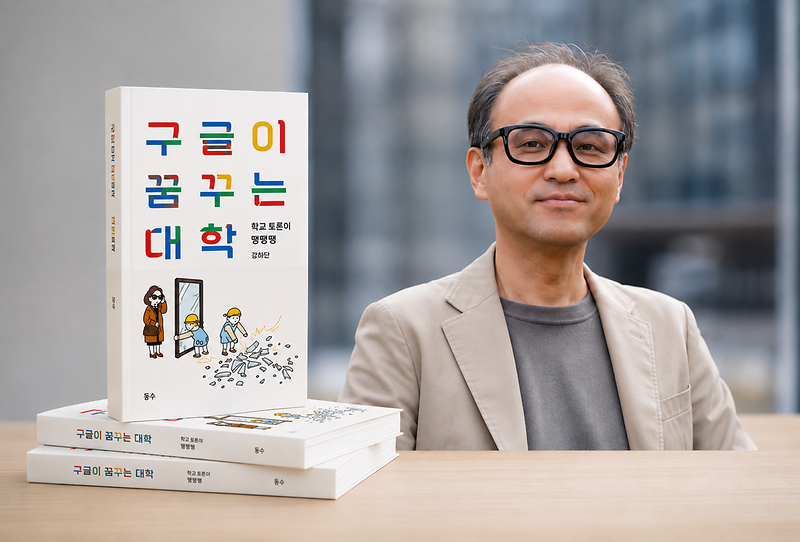
New Publication by Professor Jaewon Cho Explores the Future of Higher Education in the Age of AIThe book argues that future universities should place greater emphasis on inquiry, collaboration, and knowledge creation.JooHyeon Heo“As artificial intelligence (AI) becomes increasingly capable of generating information and answering questions, what should students learn—and what role should universities play?” Those questions are at the center of a new book by Professor Jaewon Cho of Civil, Urban, Earth, and Environmental Engineering at UNIST. Published under his pen name, Kang Hadan, the book—whose Korean title references a future vision of higher education—examines how education might evolve in an era shaped by AI, large language models, and digital technologies. Professor Cho argues that many educational systems remain focused on transmitting established knowledge and rewarding students for finding correct answers. Yet today's learners face challenges—from climate change to economic uncertainty—that rarely come with predetermined solutions. In this environment, he suggests, education must place greater emphasis on inquiry, collaboration, and the creation of new knowledge. The book proposes a future learning ecosystem in which students, teachers, and AI work together to explore questions, test ideas, and develop new ways of understanding the world. Teachers serve less as providers of answers and more as guides who help students navigate different perspectives and connect learning to real-world challenges. A recurring theme throughout the book is the need to look beyond conventional measures of achievement. Professor Cho argues that curiosity, experimentation, collaboration, and creative problem-solving may be just as important as grades and test scores in preparing students for a rapidly changing world. The book also examines how emerging technologies could transform the way learning is documented and recognized. Rather than focusing solely on outcomes, future educational systems may place greater value on the process of learning itself—how students ask questions, develop ideas, respond to setbacks, and build knowledge with others. Another key theme is the role of play in education. Professor Cho suggests that meaningful learning often begins when students pursue questions out of genuine curiosity, collaborate with peers, and experiment without fear of failure. “The amount of knowledge we need to memorize is shrinking, while the amount of knowledge we need to create is growing,” Professor Cho writes. “Education should not be about finding predetermined answers, but about developing new ways to understand the world.” At UNIST, Professor Cho teaches and conducts research in environmental engineering, environmental ethics, and the humanities of science and technology. He previously served as director of the Science Walden, where he led interdisciplinary initiatives addressing issues such as climate change, social inequality, and the future of work.- 2026.06.25
- 4423
-
Research
New Study Unveils Genetic Marker Linked to Treatment Response and Relapse in Pediatric LeukemiaUNIST, Samsung Medical Center, and Pusan National University Uncover How ZNF184 Impairs DNA Repair and Drives Disease Progression.JooHyeon HeoAbstract Zinc finger proteins (ZNFs) are increasingly recognized as regulators of oncogenic transcriptional networks and DNA damage responses. Through integrative analysis of bulk and single-cell RNA sequencing data, we identified a conserved set of seven ZNF genes, including ZNF184, that are upregulated in acute lymphoblastic leukemia (ALL) and exhibit dynamic expression patterns linked to disease progression. Among these, ZNF184 uniquely localized to DNA double-strand breaks (DSBs) in a zinc finger domain-dependent manner. Functional analyzes revealed that ZNF184 suppresses homologous recombination (HR)-mediated DNA repair by impeding BRCA1 recruitment, leading to accumulation of DNA damage. ZNF184 expression was elevated in primary ALL samples and associated with increased γH2AX levels and inferior overall survival in ALL patients. Loss of ZNF184 restored HR efficiency, reduced DNA damage burden, and enhanced genome stability, while re-expression re-sensitized cells to DNA-damaging agents. Mechanistically, ZNF184 directly interacted with TRIM28 and facilitated its recruitment to DSBs, modulating TRIM28 phosphorylation and chromatin remodeling through the HP1/SUV39H1 complex. ZNF184 expression conferred heightened sensitivity to PARP inhibition and synergized with genotoxic chemotherapy in both cell lines and patient-derived ALL cells. These findings identify ZNF184 as a key modulator of DSB repair and a predictive biomarker for therapeutic strategies targeting HR-deficient ALL. A joint team from UNIST, Samsung Medical Center, and Pusan National University (PNU) has identified a gene that influences treatment outcomes and relapse in childhood leukemia, specifically acute lymphoblastic leukemia (ALL). Led by Professor Hongtae Kim from the Department of Biological Sciences at UNIST, Professor Keon Hee Yoo from Samsung Medical Center, Professor Yun Hak Kim from the School of Medicine of Pusan National University, their research uncovers new potential targets for overcoming drug resistance and preventing recurrence. ALL is the most common childhood cancer, with most patients responding well to therapy. However, some experience relapse or develop resistance, leading to poorer prognoses. The researchers investigated how differences in the cells' DNA repair mechanisms might explain these variations. Their analysis of patient genomic data highlighted ZNF184 as a key player. Elevated ZNF184 levels weaken the cell's ability to repair double-strand DNA breaks through homologous recombination—the process responsible for precise DNA repair. When HR is disrupted, DNA damage accumulates, allowing cancer cells to survive despite treatment. Patients with high ZNF184 expression showed lower survival rates, and the gene's activity fluctuated with disease status—peaking at diagnosis and relapse and falling during remission. Further experiments revealed ZNF184 localizes to damaged DNA sites and interacts with TRIM28, affecting chromatin structure and impeding repair. The team demonstrated that targeting this vulnerability enhances treatment efficacy. Combining PARP inhibitors—already used in other cancers—with conventional chemotherapy significantly increased leukemia cell death, especially in cells with high ZNF184 expression. This research suggests that measuring ZNF184 levels could help identify high-risk patients and tailor more effective treatments. By exploiting the specific weaknesses caused by ZNF184 overexpression, doctors may improve outcomes while minimizing side effects. Professor Hongtae Kim, lead author and professor at UNIST, remarked, “Understanding how ZNF184 disrupts DNA repair pathways opens new avenues for treating resistant leukemia. Targeted therapies that exploit these vulnerabilities could transform outcomes for high-risk children.” Supported by the Ministry of Trade, Industry & Energy (MOTIE), Seoul National University (SNU), and the National Research Foundation of Korea (NRF), the full research appears in Nucleic Acids Research on June 10, 2026. Journal Reference Won Chan Hwang, Hee Young Ju, Kibeom Park, et al ., "ZNF184 negatively regulates HR repair and predicts poor prognosis in acute lymphoblastic leukemia", Nucleic Acids Res., (2026).- 2026.06.25
- 5838
-
News
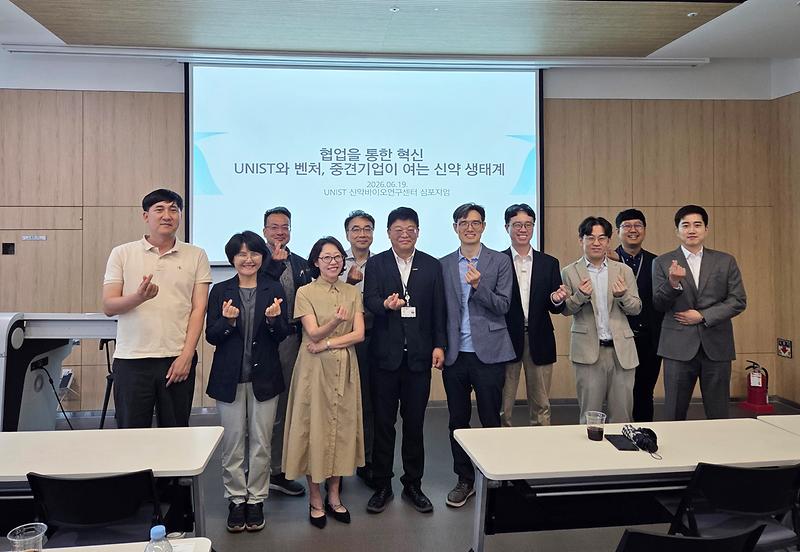
UNIST Brings Researchers and Industry Together to Advance Drug DiscoveryHeld on June 19, the symposium explored new partnerships connecting academic research with biotechnology startups and pharmaceutical companies.JooHyeon HeoDeveloping new medicines increasingly depends on close collaboration between academia and industry. To strengthen those partnerships, UNIST hosted a symposium on June 19 exploring how universities, biotechnology startups, and pharmaceutical companies can work together to accelerate drug discovery. Hosted under the theme ' Innovation Through Collaboration ,' the symposium brought together faculty members from UNIST and key representatives from Hanlim Pharmaceutical, Sangmyung Innovation, Mothers Pharmaceutical, InsPharmTech, and SmartinBio. The event opened with welcome remarks from UNIST Vice President Hyun Sil Ahn of Research Affairs and congratulatory remarks from Jin Ha Park, Executive Vice President of Hanlim Pharmaceutical and CEO of Sangmyung Innovation. Presentations covered a wide range of emerging therapeutic technologies, including broad-spectrum antiviral therapies, targets for inflammatory aging, treatments for retinal diseases, ocular disease models, advanced drug delivery systems, and mitochondria-targeted therapeutics. Beyond highlighting scientific advances, discussions focused on how universities, startups, and established pharmaceutical companies can better combine their respective strengths in research, development, and commercialization. Participants explored ways to accelerate the translation of promising discoveries into new medicines while expanding opportunities for collaborative research. The symposium also highlighted the growing role of UNIST-based biotechnology startups in the regional biohealth sector. By working alongside established pharmaceutical companies, early-stage ventures can gain access to development expertise, commercialization pathways, and collaborative research opportunities that support long-term growth. “Drug discovery has become too complex for any single institution or company to tackle alone,” said Professor Jang Hyun Choi, Chair of the Department of Biological Sciences, who also directs UNIST's new drug bio research center. “Innovation happens when universities and industry combine their respective strengths in research and commercialization. We hope this symposium serves as a catalyst for new partnerships that accelerate drug discovery and strengthen Korea’s biopharmaceutical sector.” The symposium was jointly organized by the Department of Biological Sciences and UNIST's new drug bio research center, with support from SmartinBio and Hanlim Pharmaceutical.- 2026.06.25
- 3892
-
Community
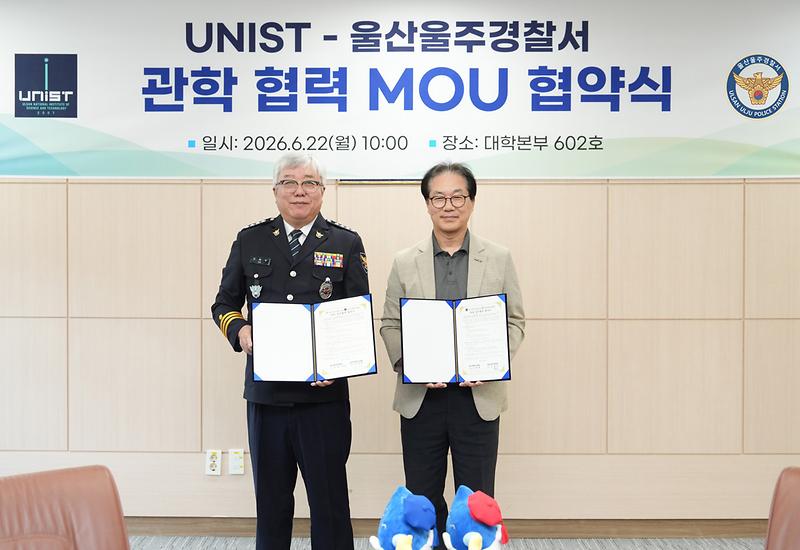
UNIST and Ulsan Ulju Police Strengthen Partnership to Promote Campus SafetyJooHyeon HeoOn June 22, UNIST and the Ulsan Ulju Police Station signed an agreement to expand collaboration on campus safety, crime prevention, and AI-based professional training. The partnership will combine UNIST's educational expertise with the police's public safety experience through joint programs for students, staff, and police personnel. The two institutions will collaborate on crime prevention education, educational visits to police facilities, public safety awareness programs, and AI-based training for police personnel, with UNIST contributing its educational resources and academic expertise. “A safe campus is essential for students and researchers to focus on learning and discovery,” said UNIST President Chong Rae Park. “Th with the Ulsan Ulju Police Station, we will continue fostering an environment where every member of our community can study and conduct research with confidence.” Tae Woo Kim, Chief of the Ulsan Ulju Police Station, said the partnership reflects a shared commitment to public safety and community engagement. “We will continue working closely with UNIST to strengthen practical cooperation and build a safer environment for both university members and local residents,” he said.- 2026.06.24
- 3601
-
News
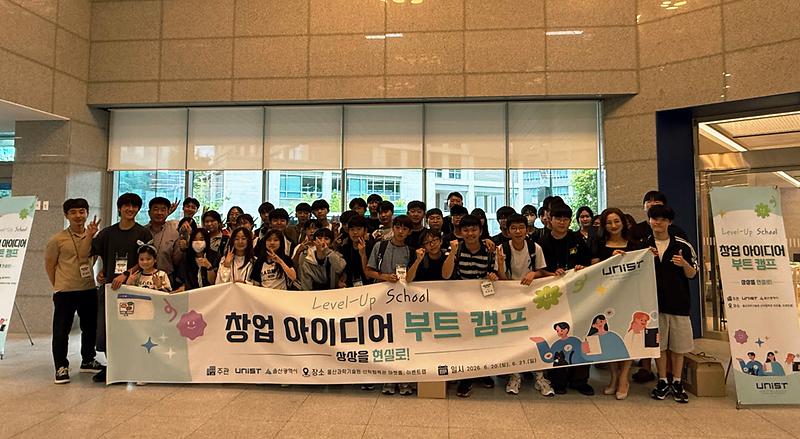
From Problem-Solving to Pitching: Students Experience Entrepreneurship at UNISTSixty middle and high school students developed and pitched business ideas through a hands-on entrepreneurship boot camp.JooHyeon HeoSixty middle and high school students from across Ulsan gathered at UNIST to experience the startup process firsthand—from identifying problems and testing ideas to pitching business concepts. Held on June 20–21 at the UNIST University-Industry Cooperation Building, the Level-Up School Startup Idea Boot Camp offered students a hands-on introduction to entrepreneurship through workshops, mentoring, and team-based projects. The program was jointly organized by UNIST and the Ulsan Metropolitan Office of Education. Rather than beginning with business plans, students started by identifying real-world problems. Working in teams, they examined everyday challenges, identified potential customers, evaluated existing solutions, and refined their ideas based on market needs. Generative AI tools were used throughout the program to conduct market research, compare competing products and services, and strengthen business concepts. Participants also used the technology to refine presentations and communicate their ideas more effectively. Students then organized their ideas using a Lean Canvas model, outlining customer needs, proposed solutions, revenue models, and competitive advantages. Entrepreneurship mentors provided feedback on market potential, business strategy, and areas for improvement. The boot camp concluded with the 'L Series Ideathon ,' where teams delivered three-minute investor-style pitches and received feedback from entrepreneurship experts. The program also served as preparation for the Korea Youth Entrepreneurship Competition, giving students experience in idea development, market research, business planning, and pitching. “Students had the opportunity to see how AI and entrepreneurship can come together to create new value,” said Director Youngsik Kim of University-Industry Relations at UNIST. “We hope experiences like this encourage young people to explore entrepreneurship and develop the skills needed to bring new ideas to life.”- 2026.06.23
- 3265
-
News
UNIST and Asan Medical Center Explore New Frontiers in Medical AIResearchers explored how clinical data and AI can support diagnosis, prediction, and personalized care.JooHyeon HeoArtificial intelligence (AI) is creating new opportunities in healthcare, from helping doctors detect disease earlier to anticipating complications and tailoring treatments to individual patients. Yet turning clinical data into tools that can support real-world medical decisions remains a significant challenge. On June 16, researchers from UNIST and Asan Medical Center came together to discuss how advances in AI, data science, and clinical medicine can help bridge that gap. A recurring question throughout the discussions was how AI can help clinicians make better decisions in complex healthcare settings. Researchers shared work on digital pathology, critical care analytics, predictive modeling, and other approaches aimed at turning clinical data into actionable insights for patient care. More than 40 researchers and clinicians from UNIST and Asan Medical Center participated in the discussions, bringing together expertise in AI, biomedical engineering, computer science, and clinical medicine. Topics ranged from disease diagnosis and prognosis to patient monitoring and treatment planning. Several presentations highlighted areas where AI is beginning to show promise in clinical practice, including the analysis of data generated in operating rooms and intensive care units, digital pathology for disease detection, and predictive models designed to anticipate patient outcomes. Researchers also discussed digital twin approaches that could help simulate disease progression and support more personalized treatment strategies. A recurring theme throughout the event was the importance of defining meaningful clinical problems before developing technical solutions. Participants emphasized that successful medical AI depends not only on stronger algorithms, but also on close engagement with clinicians who understand the realities of patient care. The discussions also highlighted how the two institutions bring different capabilities to the partnership. UNIST continues to expand its capabilities in large-scale medical data analysis through advanced AI research and high-performance computing resources. Asan Medical Center, meanwhile, is developing an Integrated Data Platform (IDP) to support the secure and efficient use of clinical data for research. Since launching their partnership earlier this year, the two institutions have been exploring new opportunities for researcher exchange and joint projects that combine clinical expertise with advances in artificial intelligence. Areas of interest include digital pathology, critical care analytics, and predictive models that can help doctors make more informed decisions and deliver more personalized care. “This gathering provided an opportunity to connect UNIST's strengths in artificial intelligence and data science with Asan Medical Center's clinical expertise,” said Dean Seungjae Baek of UNIST Graduate School of Health Science and Technology. “By bringing researchers together around real challenges in healthcare, we hope to develop research that can ultimately improve patient outcomes.” Dong Hyun Yang, Director of the AI Innovation Support Office at Asan Medical Center, said, “Combining extensive clinical data with advanced AI technologies creates new opportunities to address complex challenges in healthcare. We look forward to expanding research that supports more accurate predictions, better clinical decision-making, and increasingly personalized patient care.”- 2026.06.23
- 3909
-
Research
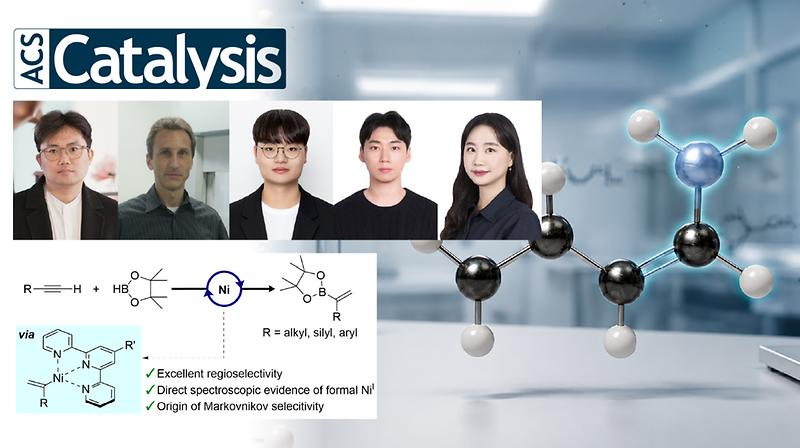
New Nickel-Catalyzed Method for Precise Attachment of Boron to AlkynesThese findings appeared in ACS Catalysis on April 17, 2026.JooHyeon HeoAbstract Nickel-catalyzed hydrofunctionalization reactions, including the hydroboration of alkynes, have been generally proposed to proceed via classical two-electron pathways or, alternatively, through a NiIH-based insertion mechanism. Despite efforts to discern these pathways, explicit spectroscopic observation of NiIH species and relevant mechanistic information on LNiI(alkenyl) species remain lacking. Herein, we provide experimental evidence of formal NiI intermediates, suggestive of a NiIH-based insertion mechanism for alkyne hydroboration. The formation of a NiI catalyst precursor, LnNiI(dpm) (dpm = dipivaloylmethanate anion) and an LnNi(alkenyl) intermediate was confirmed by EPR spectroscopy and HRMS analysis. Their involvement in the catalytic reaction was demonstrated by stoichiometric and catalytic reactivity studies. The origin of the counterintuitive Markovnikov selectivity in the formation of the α-alkenylboronate product was probed by systematic ligand electronic effect studies. Computational analyzes rationalize the selectivity by a kinetic preference for formation of the α regioisomer of the LnNi(alkenyl) intermediate through noncovalent interactions. Researchers at UNIST have introduced a new chemical methodology that employs cost-effective nickel catalysts to achieve site-selective boron addition to alkynes. This breakthrough significantly broadens the repertoire of molecular modifications, with promising implications for pharmaceutical development and advanced material synthesis. Led by Professors Sung You Hong and Jan-Uwe Rohde from the Department of Chemistry, the team focused on terminal alkynes—molecules characterized by a triple bond at one end. Their innovative approach selectively activates and cleaves the triple bond, enabling boron atoms to be introduced internally, rather than at the terminal position. The resulting products can subsequently be transformed into a diverse array of functional compounds. The process involves the controlled cleavage of the alkyne's triple bond facilitated by nickel, which transiently binds to the substrate, directing boron attachment to the internal carbons. Once boron is installed, nickel is released, leaving a boron-containing moiety primed for further synthetic elaboration. This highly regioselective strategy broadens the scope for constructing complex molecular architectures with precision. Application of this methodology to the modification of various substrates—including derivatives of the anticancer agent bexarotene and analogs of pargyline—demonstrates its versatility and potential to streamline the synthesis of pharmaceutical compounds. By enabling targeted modifications, this technique could accelerate the development of new drug candidates and lead to more efficient drug synthesis pathways. Central to the mechanistic understanding of the reaction were the detection and characterization of fleeting nickel intermediates, achieved through electron paramagnetic resonance (EPR) spectroscopy and high-resolution mass spectrometry. Complementary computational studies elucidated the stabilizing noncovalent interactions underlying the reactions's regioselectivity, providing valuable insights into its driving forces. First authors Jeong Woo Lee, Gun Ha Kim, and Seo Yeong Jeong played key roles in the research. Professor Rohde remarked, "The products of a catalytic reaction rarely reveal the route it took. By catching these short-lived nickel intermediates, we could map the reaction pathway to the site where boron is added. This approach gives chemists a more rational basis for designing new catalysts." Professor Hong emphasized the broader significance, noting “The value of nickel here is not only that it is abundant and inexpensive. It lets us control a difficult reaction at a specific site, turning simple alkynes into building blocks that can be used to make medicines and organic materials.” The study was published in ACS Catalysis on April 17, 2026, and supported by the Basic Science Research Program and the ERC Project (Engineering Research Center for Microplastic through Bio/Chemical engineering Convergence Process) funded by the National Research Foundation of Korea (NRF). Journal Reference Jeong Woo Lee, Gun Ha Kim, Seo Yeong Jeong, et al ., "Spectroscopic Evidence of a Reduced Alkenylnickel Intermediate in Catalytic Markovnikov-Selective Alkyne Hydroboration," ACS Catal., 2026, 16, 7551-7561.- 2026.06.23
- 7449
-
News
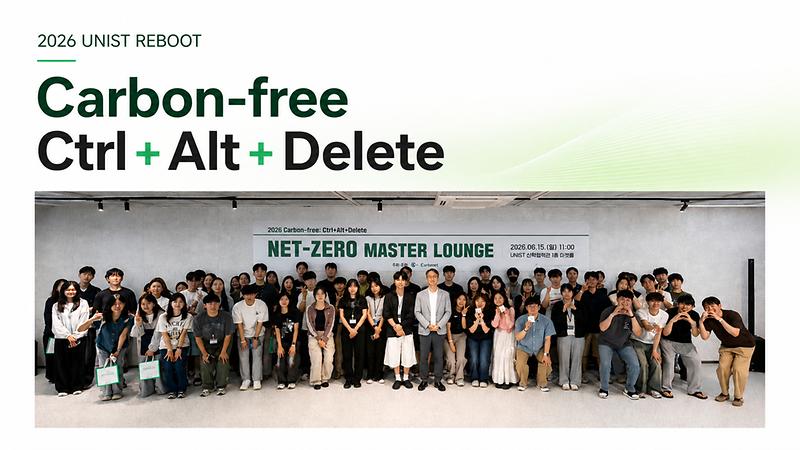
UNIST Students Turn Everyday Habits into Climate Action Through REBOOT 2026More than 180 students joined a weeklong sustainability challenge, with 87 earning Net-Zero Master recognition.JooHyeon Heo“What does carbon neutrality look like in everyday life?” For five days in June, students at UNIST explored that question through a campus-wide challenge focused on practical climate action. Held from June 1 to 5 in conjunction with World Environment Day, the 2026 UNIST REBOOT: Carbon-free Ctrl+Alt+Delete campaign brought together 180 students for a week of sustainability-focused activities. By the end of the challenge, 87 participants had completed every mission and earned recognition as Net-Zero Masters. The theme, ' Carbon-free Ctrl+Alt+Delete ,' used the familiar computer command as a metaphor for replacing carbon-intensive habits with more sustainable ones. The campaign encouraged students to view carbon neutrality not as a distant goal, but as something shaped by everyday choices. Students participated individually and as members of eight Green Squad teams, where individual actions contributed to team results. The campaign also reflected its sustainability message in practice, relying entirely on digital promotion rather than printed materials. The week concluded with the Net-Zero Master Lounge , a gathering that recognized students who completed the full program. Participants received commemorative items marking their achievements, including personalized keepsakes created by the Graduate School of Carbon Neutrality. The UNIST Graduate School of Carbon Neutrality also plans to recognize the 87 Net-Zero Masters through a Hall of Fame on its website, while continuing to expand programs that encourage sustainable practices across campus. “World Environment Day provided an opportunity to see members of the UNIST community put carbon neutrality into practice in meaningful ways,” said Dean Yongwon Seo of the Graduate School of Carbon Neutrality. “We hope experiences like this help demonstrate that sustainability is not a distant goal, but something that can be incorporated into everyday life.”- 2026.06.23
- 3101