Community
Community
NEWS
총 2602건의 게시물이 있습니다.
There are a total of 2602 posts.
-
News
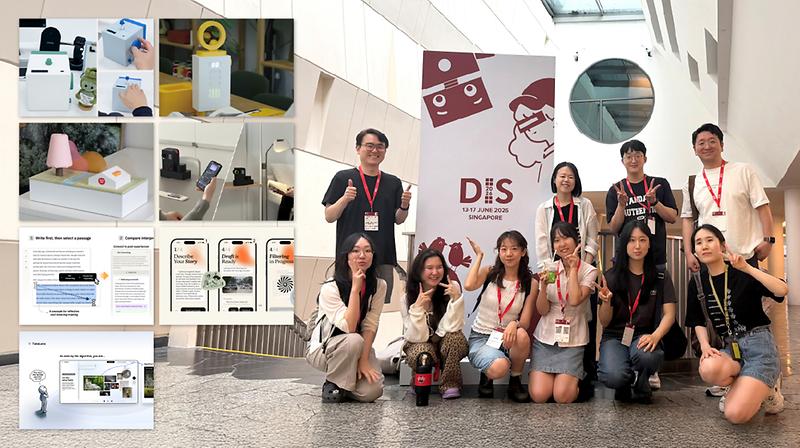
Seven Papers from UNIST Accepted to ACM DIS 2026The research presented at ACM DIS 2026 highlights advances in AI, human-computer interaction, and user experience design.JooHyeon HeoUNIST researchers earned international recognition through seven papers accepted to ACM Designing Interactive Systems (DIS) 2026, one of the world's leading conferences in human-computer interaction (HCI), interactive systems, and user experience (UX) design. Their research explores how emerging technologies—including AI, digital communication, and interactive media—can be designed to better support everyday life, strengthen human relationships, and encourage self-reflection. Held at the National University of Singapore, ACM DIS brings together researchers from design, computer science, and related disciplines to explore the future of human-centered technologies. Faculty members from the Department of Design at UNIST contributed research spanning embodied interaction, human-centered AI, and algorithmic transparency, demonstrating how thoughtful design can make emerging technologies more intuitive, meaningful, and accessible. Rethinking Everyday Interaction Professor Young-Woo Park's research group presented four papers examining how physical interaction can reshape familiar digital experiences—from notifications and workplace communication to messaging and music sharing. Together, the four projects demonstrate how subtle changes in interaction design can make everyday technologies more intuitive, expressive, and emotionally engaging. Prepy replaces conventional notification sounds with gentle vertical movement to communicate upcoming events, while SOTATE visualizes a person's social battery to support communication in open-plan offices. Adilet adds a tangible dimension to digital messaging, and Reelee transforms music sharing into an interactive experience that helps people maintain emotional connections across distance. Human-Centered AI Two papers from Professor Kyungho Lee's group examined how AI can support reflection, creativity, and civic participation while keeping people at the center of decision-making. Augmentiary uses large language models (LLMs) to support reflective journaling by providing thoughtful feedback that encourages self-reflection while preserving users' agency. Another study presents an AI-assisted platform for local journalism that enables citizens to contribute community news through AI-supported writing combined with collaborative human review, strengthening trust and civic engagement. Is This the Real Me? Professor Dajung Kim's research group explored how recommendation algorithms shape digital identity through TubeLens . The project asks a simple but thought-provoking question: " Is This the Real Me?" By transforming a user's YouTube recommendation history into an algorithmic self-portrait, it encourages users to critically examine how recommendation algorithms shape—and sometimes distort—their digital identities. Although the seven projects span diverse applications, they share a common goal: designing technologies that are more human-centered, transparent, and meaningful. Rather than adding complexity, the research demonstrates how thoughtful interaction design can help people engage with AI and digital systems in more intuitive and empowering ways. Together, the seven papers reflect the growing international recognition of UNIST's Department of Design in HCI and interactive design research, while highlighting the expanding role of human-centered design in shaping the future of emerging technologies.- 2026.07.06
- 3426
-
Research
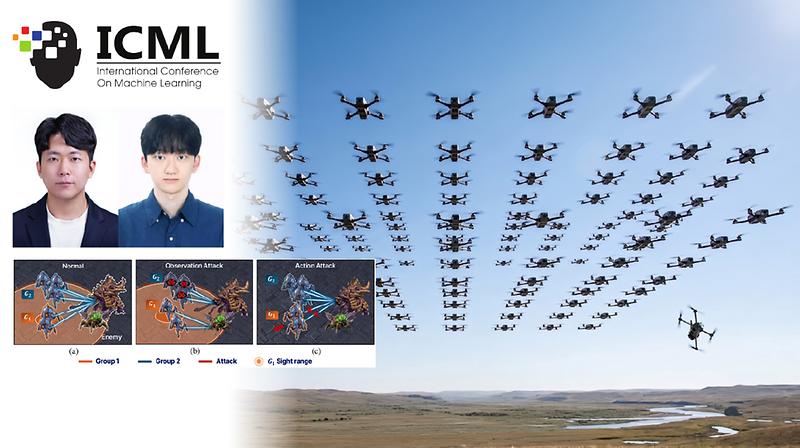
New Reinforcement Learning Framework Makes Cooperative AI More ResilientTheir findings were accepted for presentation at the ICML '26, which took place in Seoul, from July 6 to 11, 2026.JooHyeon HeoAbstract Cooperation is central to multi-agent reinforcement learning (MARL), yet learned coordination can be fragile when external perturbations disrupt inter-agent interactions. Prior robust MARL methods have primarily considered value-oriented attacks, leaving a gap in robustness when interaction structures themselves are corrupted. In this paper, we propose an interaction-breaking adversarial learning (IBAL) framework that takes an information-theoretic view to construct attacks that impede coordination by perturbing agents' observations and actions, and trains agents to perform reliably under such disruptions. Empirically, our approach improves robustness over existing robust MARL baselines across diverse attack settings and yields stronger performance even under agent-missing scenarios. From autonomous drone swarms to industrial robots and self-driving vehicles, many AI systems depend on multiple agents working together. Yet when communication fails or individual agents become unavailable, coordination can quickly break down. Researchers at UNIST have developed a new reinforcement learning framework that trains AI agents to adapt to these disruptions, enabling them to continue working together under conditions that would typically cause conventional systems to fail. Led by Professor Seungyul Han of the Graduate School of Artificial Intelligence, the research team developed Interaction-Breaking Adversarial Learning (IBAL) , a multi-agent reinforcement learning framework that deliberately disrupts coordination during training. Rather than exposing agents only to ideal conditions, IBAL repeatedly simulates communication failures and missing teammates, encouraging the remaining agents to reorganize their roles and develop new cooperative strategies. Unlike previous robust reinforcement learning methods, which primarily strengthen individual agents against noisy observations or unfavorable actions, IBAL focuses on the interactions between agents. During training, the framework identifies information that is essential for coordination and selectively disrupts it, preparing AI systems to maintain cooperation even when communication becomes unreliable. "Existing robust multi-agent reinforcement learning methods mainly interfere with individual agents," said Sunwoo Lee, the study's first author. “IBAL instead challenges the interactions that enable cooperation, allowing the remaining agents to discover new ways of working together when communication is interrupted or some agents fail.” The researchers evaluated the proposed IBAL on the StarCraft II Multi-Agent Challenge (SMAC). In scenarios where some allied units suddenly became unavailable, conventional models often experienced cascading failures, with some achieving win rates as low as 13.3%. By contrast, agents trained with IBAL adapted their strategies in real time—reorganizing team formations and redistributing roles—and achieved a win rate of 87.0%. “Many real-world AI systems rely on multiple agents working together, making them vulnerable to equipment failures or communication loss,” said Professor Han. “Our framework trains AI agents to adapt to these unexpected disruptions and continue accomplishing their task, providing a foundation for safer and more reliable multi-agent systems.” The study has been accepted for presentation at the International Conference on Machine Learning (ICML) 2026, which will be held in Seoul from July 6 to 11, 2026. The research was supported by the Ministry of Science and ICT (MSIT), the Institute for Information & Communications Technology Planning & Evaluation (IITP), and the National Research Foundation of Korea (NRF). Journal Reference Sunwoo Lee, Mingu Kang, Yonghyeon Jo, and Seungyul Han, "Interaction-Breaking Adversarial Learning Framework for Robust Multi-Agent Reinforcement Learning," ICML '26 , (2026).- 2026.07.03
- 1541
-
Research
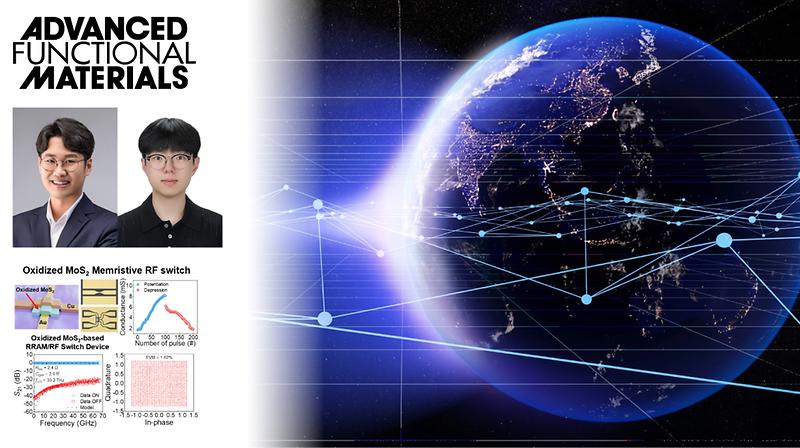
New Semiconductor Device Brings Communication and AI Computing onto a Single ChipThese findings appeared in Advanced Functional Materials on June 6, 2026.JooHyeon HeoAbstract Next-generation 6G communication systems necessitate hardware that simultaneously manages high-frequency signal routing and massive matrix-level computations under extreme constraints. However, conventional digital architectures suffer from high power dissipation and area overhead. Here, we report an oxidized molybdenum disulfide (MoS2)-based memristive platform that integrates nonvolatile radio-frequency (RF) switching and energy-efficient vector–matrix multiplication. By implementing a controlled thermal oxidation process, we achieve stable resistive switching with low switching energy and zero-static power consumption, while maintaining a high cutoff frequency of 33.2 THz, outperforming existing phase-change and microelectromechanical systems (MEMS) technologies. Using system-level simulations, we demonstrate the robustness of this hardware through successful 1024-quadrature amplitude modulation (1024-QAM) demodulation, spectral analysis, and multiple-input multiple-output (MIMO) signal reconstruction, even when accounting for intrinsic device non-idealities. This monolithic integration of high-frequency switching and analog computing provides a scalable solution for energy-efficient deployment of intelligent wireless systems. Future 6G networks and satellite communication systems will require hardware that can process growing amounts of data while operating under strict power and space constraints. Professor Myungsoo Kim and his research team from the Department of Electrical Engineering at UNIST introduced a new semiconductor device that combines high-frequency signal switching and computation on a single platform, offering a more compact and energy-efficient approach to next-generation wireless systems. At the heart of the platform is a multifunctional memristor based on oxidized molybdenum disulfide (MoS2), a two-dimensional semiconductor. The device functions as both a radio-frequency (RF) switch and hardware for in-memory matrix operations, bringing communication and computation onto a single chip. Conventional communication systems typically separate these functions, requiring signals to move between switching circuits and processors. This data movement increases power consumption, processing delays, and chip size. By integrating both functions into a single device, the new platform simplifies signal processing while improving energy efficiency. The memristor also operates without standby power. Once switched between its ON and OFF states, it retains that state even after power is removed, making it particularly well suited to energy-constrained applications such as satellite communications and future 6G infrastructure. The device demonstrated a switching energy of just 140 picojoules per operation and switching power below one milliwatt. It maintained stable operation for more than 40,000 seconds and over 1,000 switching cycles, while achieving a calculated cutoff frequency of 33.2 THz. Experimental measurements verified high-frequency switching up to 67 GHz. To evaluate its computing capability, the researchers performed system-level simulations of wireless communication tasks. The device successfully carried out 1024-quadrature amplitude modulation (1024-QAM) demodulation and multiple-input multiple-output (MIMO) signal reconstruction, demonstrating that a single hardware platform can efficiently support both communication and signal processing. "Commercial RF switches continuously consume standby power and often suffer signal loss at high frequencies," said Juhyo Son, the study's first author. "Our device addresses these limitations while remaining competitive with existing phase-change memory and MEMS technologies in energy efficiency, operating speed, and scalability." Professor Kim added, "Our study demonstrates that oxidized MoS₂ memristors can function not only as high-performance RF switches but also as hardware for the in-memory matrix operations required for next-generation wireless communications. By combining nonvolatile operation, low power consumption, and high-frequency performance, this platform could contribute to more compact and energy-efficient systems for satellite communications, radar, defense electronics, and future 6G RF front ends." The research was supported by the National Research Foundation of Korea (NRF) through the Ministry of Science and ICT (MSIT), the Institute for Information & Communications Technology Planning & Evaluation (IITP), the Space-K BIG Project, and a regional talent development program. The findings were published online in Advanced Functional Materials on June 6, 2026. Journal Reference Juho Son, Changwoo Pyo, Sungmoon Park, et al., “ Oxidized MoS2-Based Multifunctional Memristive Hardware for Energy-Efficient mmWave Signal Processing and In-Memory Matrix Multiplication ,” Adv. Funct. Mater., (2026).- 2026.07.02
- 7234
-
News
UNIST Partners with Portal Innovations to Help Regional Biotech Companies Enter the U.S. MarketGlobal mentoring program connects startups in Ulsan with U.S. experts, investor networks, and commercialization guidance.JooHyeon HeoEntering the US market can be particularly challenging for early-stage biotechnology companies. Beginning in July, UNIST will launch a global mentoring program in partnership with Chicago-based life sciences innovation platform, Portal Innovations to help biotechnology and digital healthcare companies in Ulsan navigate the US market. Supported by Ulsan City, the program builds on the memorandum of understanding signed by UNIST and Portal Innovations in May 2026. It will connect participating companies with experienced mentors, investor networks, and commercialization expertise in the United States. Each participating company will receive approximately four months of one-on-one online mentoring tailored to its stage of development. Dedicated mentors will advise on fundraising, clinical development, commercialization strategy, and market entry, while introducing companies to US startup support programs and investor networks. The first company selected for the program is Oprimed Inc., an AI healthcare startup developing generative AI and statistical digital twin technologies to support clinical development decision-making. Through the mentoring program, Oprimed Inc. will receive tailored guidance from international experts on clinical development, commercialization strategy, and expansion into global markets. “Working with Portal Innovations marks an important step in helping Ulsan's biotechnology and digital healthcare companies compete internationally,” said Seungjae Baek, Dean of the Graduate School of Health Science and Technology at UNIST. “Together with Ulsan City, we will continue developing practical partnerships that help regional companies grow globally while strengthening Ulsan’s bio and digital healthcare sector.” UNIST plans to expand similar international partnerships that provide regional companies with greater access to global expertise, investment opportunities, and commercialization networks.- 2026.07.01
- 4706
-
Research
Beyond AlgorithmsFrom understanding people and the physical world to enabling scientific discovery, AI is reshaping research across disciplines.JooHyeon Heo《Editor's Note: Scientific discovery has always depended on our ability to observe and understand the world. Increasingly, however, many of science's most pressing questions—from interpreting human behavior and dynamic environments to advancing healthcare and understanding Earth's changing climate—have grown too complex for conventional approaches alone. Across disciplines, UNIST researchers are using artificial intelligence to reveal patterns, improve prediction, and open new pathways for discovery. The latest work—from enabling machines to understand human emotion and perceive the physical world to revealing new insights into cities and climate—reflects a broader shift in science: AI is no longer simply a field of research. It is becoming part of how research itself is done.》 From Data to Insight AI is becoming increasingly capable of interpreting the world with greater nuance and context. At UNIST, researchers are advancing AI's ability to understand both people and the physical world through innovations in computer vision and multimodal learning. One research team developed an AI framework that translates emotional cues from speech into realistic facial expressions, enabling more natural human–AI interaction. Another explored how robots can better interpret social touch and express emotions through movement, making human–robot interaction feel more intuitive and lifelike. Researchers also introduced a new camera calibration method that significantly improves how machines perceive dynamic environments. Together, these studies show how AI is moving beyond recognizing data toward interpreting people, interaction, and the physical world. ■ AI Turns Speech into Natural Facial Expressions (CVPR 2026) ■ Making Human-Robot Interaction More Natural (ICRA 2026) ■ AI Advances Event Camera Calibration (CVPR Highlight 2026) From Insight to Discovery AI is emerging as an essential research tool, helping scientists uncover patterns and relationships that would be difficult to detect through conventional methods alone. Rather than replacing scientific expertise, AI is expanding how researchers investigate complex systems across disciplines. At UNIST, researchers developed LightSplat, enabling AI to recognize objects within complex 3D scenes from natural language descriptions in just five seconds. Another team combined deep learning with hyperspectral satellite imagery to detect methane emissions faster and more accurately, improving how researchers monitor one of the world's most potent greenhouse gases. Together, these studies illustrate how AI is accelerating scientific discovery across both digital and environmental systems. ■ AI Recognizes 3D Objects in Five Seconds (CVPR 2026) ■ AI Detects Methane from Space (npj Clim. Atmos. Sci. l Mar. 2026) Across disciplines, AI is becoming more than a field of study. It is emerging as a common language for discovery—expanding not only what researchers can discover, but the questions they are able to ask. Explore the latest issue and follow 『The UNIST Brief』 on LinkedIn to stay updated. Subscribe via LinkedIn- 2026.07.01
- 6414
-
News
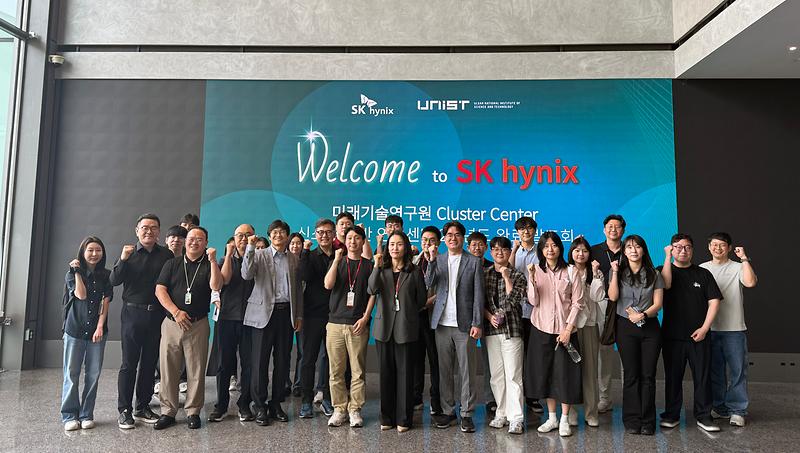
UNIST and SK hynix Advance Joint Research on Next-Generation Memory TechnologiesIndustry–academia partnership reviews progress in semiconductor materials research and sets priorities for the next phase of collaboration.JooHyeon HeoUNIST and SK hynix are advancing their joint research partnership to develop core technologies for next-generation memory semiconductors, building on two years of collaborative research in semiconductor materials and device technologies. On June 25, researchers from both organizations met at the SK hynix Icheon Campus to review progress across their joint projects and discuss research priorities for the next phase of the collaboration. The partnership is part of SK hynix's cluster-based industry–academia research initiative, which brings together leading universities to pursue strategic research in areas aligned with their academic strengths. At UNIST, the program focuses on three areas critical to future memory devices: novel channel materials, interconnect technologies, and advanced materials characterization. During the meeting, research teams presented findings from the past year while SK hynix engineers provided technical feedback and discussed opportunities to further align the research with future semiconductor technologies. The discussions highlighted the importance of close collaboration between academic researchers and industry engineers in translating fundamental research into practical applications. Graduate students and researchers also toured the FAB facility of SK hynix, gaining firsthand insight into semiconductor manufacturing and the industrial environment where many of the technologies under development may ultimately be applied. “Our partnership with SK hynix continues to create valuable opportunities for advancing next-generation semiconductor research,” said Dean Soo Hyun Kim of UNIST Graduate School of Semiconductor Materials and Components. “We will continue strengthening both our research capabilities and the professional development of our students and researchers through sustained industry collaboration.”- 2026.06.30
- 3833
-
Research
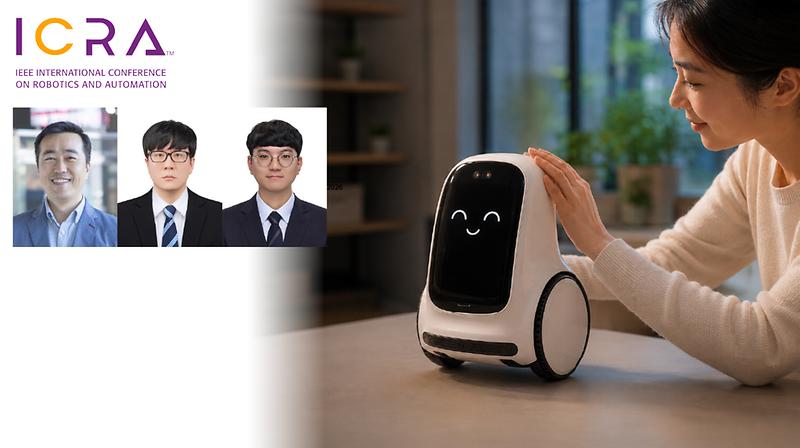
Toward More Natural Human-Robot InteractionTwo studies presented at IEEE ICRA 2026 examine how social robots can communicate more naturally with people.JooHyeon HeoHuman interaction relies on more than spoken language. Touch, movement, and emotional expression all shape how people communicate intent and meaning. Two studies from Professor Hui Sung Lee's research group in the Department of Design at UNIST explore how robots can better participate in these forms of social communication. Presented at the IEEE International Conference on Robotics and Automation (ICRA) 2026, the studies focus on two complementary challenges in human-robot interaction that is helping robots interpret social touch and enabling them to express emotions through movement in ways people perceive as natural. ■ Touch Recognition Through Social Touch The first study examines how robots can better interpret social touch. While people often communicate affection, reassurance, or attention through touch, the same gesture can produce very different sensor signals depending on the individual. Variations in hand size, movement, and force can make it difficult for robots to reliably identify the intent behind a touch. To address this challenge, the researchers adapted a feature-extraction technique commonly used in speech recognition to analyze capacitive touch signals. By focusing on recurring rhythmic and frequency patterns rather than absolute signal strength, the framework allows robots to recognize touch gestures more consistently across users. The approach also reduces the amount of information required for processing, making it suitable for lightweight robotic systems operating in real time. “Even when people perform the same gesture, the resulting touch signals can vary considerably from person to person,” said Ji Soo Kim, the first author of the study. "Our framework improves a robot's ability to distinguish different forms of social touch using simple capacitive sensors without requiring complex tactile hardware." ■ Calibrating Emotional Expression The second study, led by Haeun Park as first author, explored how the intensity of a robot's emotional expressions affects how people perceive them. While robots are increasingly capable of displaying emotional states, those expressions are often delivered at a fixed intensity, which can appear mechanical or unnatural. The researchers investigated whether adjusting the intensity of robotic movements could make emotional expressions feel more lifelike and engaging. The research team addressed this issue by adjusting the damping ratio within an emotion dynamics model, enabling robotic movements to be expressed at five different intensity levels. This allowed the degree of movement exaggeration, or overshoot, to be carefully controlled for different emotions. Through user evaluations, the researchers found that stronger expressions increased perceptions of surprise, while other emotions were rated most favorably at moderate levels. The results suggest that emotional intensity should be calibrated differently depending on the emotion being conveyed. The results suggest that emotional intensity should be calibrated differently depending on the emotion being conveyed. “Human interaction depends on both perception and expression,” said Professor Lee. “These studies examine how robots can better interpret social cues and communicate their own responses, which are both important for creating more natural interactions between people and robots.” ICRA 2026 was held in Vienna, Austria, from June 1–5. Organized by the IEEE Robotics and Automation Society (RAS), it is widely regarded as one of the leading international conferences in robotics. [Journal Reference 1] Ji Soo Kim, Sun Jun Hwang, Hyojin Kim, Dong Joon Hwang, and Hui Sung Lee, "MFCC-Inspired Spectral Feature Extraction for Robust Touch Interaction in Social Robots," IEEE International Conference on Robotics and Automation (ICRA 2025) , Vienna, Austria, 2026. [Journal Reference 2] Haeun Park, Jiyeon Lee, and Hui Sung Lee, "Dynamic Modulation of Emotional Expressions in Social Robots: Effects on Liveliness and Naturalness," IEEE International Conference on Robotics and Automation (ICRA 2025) , Vienna, Austria, 2026.- 2026.06.30
- 2080
-
News
UNIST Strengthens Industrial AI Workforce Through Novatus AcademiaNew cohorts in Ulsan and Busan expand practical AI training for industry professionals and aspiring entrepreneurs.JooHyeon HeoArtificial intelligence is transforming industry, but successful AI adoption depends on people who can apply it to real operational challenges. Through its Novatus Academia AI Practitioner Program, UNIST is helping professionals develop those capabilities by combining hands-on AI education with projects based on real industrial data. This summer, the program welcomed its ninth cohort in Ulsan while launching its inaugural cohort in Busan, further extending UNIST's industry-focused AI training model across the region. The ninth Ulsan cohort officially began on June 26 at the UNIST Pioneers Campus, bringing together 58 professionals from 42 manufacturing companies, ICT firms, and public organizations. Participants will learn AI and data analytics while completing projects based on data from their own workplaces, addressing challenges in manufacturing, quality control, equipment management, safety, and production processes. UNIST also launched the first Busan cohort on June 19 in partnership with the Busan INNOPOLIS. The 20-week program brings together 31 industry professionals and aspiring entrepreneurs, combining instruction in generative AI, data analytics, and AI model development with project-based learning (PBL) focused on real industrial challenges. While both programs emphasize practical AI education, the Busan cohort also places a strong focus on technology commercialization. Participants will have opportunities to connect with technical consulting, startup support resources, and industry experts to help translate AI technologies into new business opportunities. Since its launch in Ulsan in 2021, Novatus Academia has trained more than 250 professionals from over 130 companies. The program now operates across Ulsan, Busan, and Gyeongnam, supporting AI adoption through practical education tailored to regional industries. “Novatus Academia was designed to meet the needs of industry,” said Dean Namhun Kim of UNIST Novatus Graduate School. “By combining practical AI education with real industrial projects, we aim to help professionals solve challenges in their organizations while supporting AI-driven innovation across the region.” UNIST plans to further strengthen connections between its degree programs and professional education initiatives, expanding opportunities for industry professionals to develop practical AI expertise while supporting technology commercialization and industrial innovation.- 2026.06.29
- 3973
-
Research
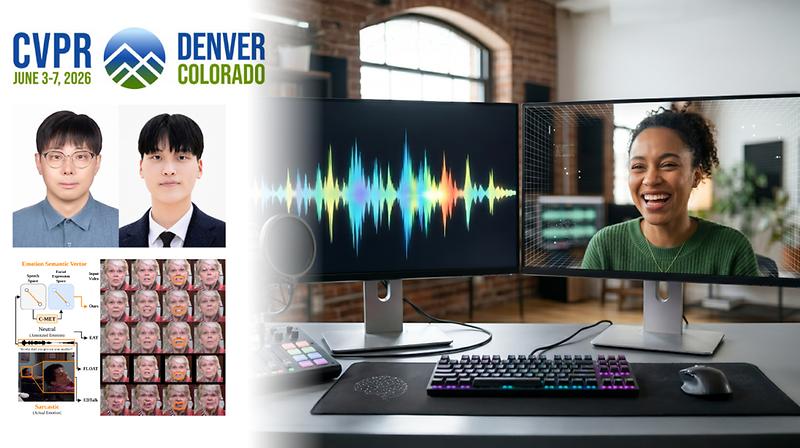
New AI Transfers Emotional Cues from Speech to Facial ExpressionsAccepted for CVPR 2026, C-MET transfers emotional cues from speech to facial expressions—even for subtle emotions beyond its training data.JooHyeon HeoAbstract Talking face generation has gained significant attention as a core application of generative models. To enhance the expressiveness and realism of synthesized videos, emotion editing in talking face video plays a crucial role. However, existing approaches often limit expressive flexibility and struggle to generate extended emotions. Label-based methods represent emotions with discrete categories, which fail to capture a wide range of emotions. Audio-based methods can leverage emotionally rich speech signals - and even benefit from expressive text-to-speech (TTS) synthesis - but they fail to express the target emotions because emotions and linguistic contents are entangled in emotional speeches. Images-based methods, on the other hand, rely on target reference images to guide emotion transfer, yet they require high-quality frontal views and face challenges in acquiring reference data for extended emotions (eg, sarcasm). To address these limitations, we propose Cross-Modal Emotion Transfer (C-MET), a novel approach that generates facial expressions based on speeches by modeling emotion semantic vectors between speech and visual feature spaces. C-MET leverages a large-scale pretrained audio encoder and a disentangled facial expression encoder to learn emotion semantic vectors that represent the difference between two different emotional embeddings across modalities. Extensive experiments on the MEAD and CREMA-D datasets demonstrate that our method improves emotion accuracy by 14% over state-of-the-art methods, while generating expressive talking face videos - even for unseen extended emotions. Sarcasm, encouragement, and empathy are often conveyed as much through tone of voice as through words themselves. Reproducing these subtle emotional cues in AI-generated talking face videos, however, remains a challenge. Researchers at UNIST have developed a new artificial intelligence (AI) module that transfers emotional information from speech to facial expressions, enabling talking face videos to express a wider range of emotions—including those the system was never explicitly trained to recognize. Led by Professor Taehwan Kim of UNIST Artificial Intelligence Graduate School (AIGS), the team introduced Cross-Modal Emotion Transfer (C-MET) , a modular AI framework that edits facial expressions using emotional cues extracted from speech. Unlike existing approaches, C-MET does not require reference images of the target expression, making it easier to generate natural facial expressions from speech alone. Most existing methods rely on predefined emotion labels or reference images to guide facial expression generation. These approaches often struggle to capture subtle emotional states because spoken language carries both linguistic meaning and emotional information, making the two difficult to disentangle. Image-based approaches also require carefully prepared examples of the desired expression, which are often unavailable for more nuanced emotions such as sarcasm. C-MET addresses these challenges by learning how changes in emotional speech correspond to changes in facial expressions. Rather than matching fixed emotion categories, the system models relationships between speech and facial features, allowing emotional cues to be transferred naturally while preserving both the speaker's identity and spoken content. Because it learns relationships between emotions rather than predefined labels, C-MET can also generate facial expressions for emotional states that were not included in the training data. The researchers evaluated C-MET by integrating it into two state-of-the-art talking face generation models. When incorporated into EDTalk, the module improved emotion accuracy on the MEAD benchmark from 41.99% to 55.91%—an increase of more than 14 percentage points. Applying C-MET to another talking face generation model, PD-FGC, also improved emotion accuracy from 33.36% to 36.82%, while reducing inference time, demonstrating that the module can be readily integrated into different talking face generation frameworks. “Our work overcomes a practical limitation of existing approaches by enabling facial expressions to be edited directly from speech without requiring reference images,” said Professor Kim. "Because C-MET functions as a modular component, it can be incorporated into a wide range of existing systems for applications such as virtual humans, educational avatars, conversational AI, and film and video post-production." The study was led by Chanhyuk Choi of AIGS, as first author. The paper has been accepted for presentation at the IEEE/CVF Conference on Computer Vision and Pattern Recognition (CVPR) 2026, one of the world's leading conferences in computer vision. Additional materials, including the source code, model checkpoints, and demonstration videos, are available on the C-MET project page. Journal Reference Chanhyuk Choi, Taesoo Kim, Donggyu Lee, et al. , "Cross-Modal Emotion Transfer for Emotion Editing in Talking Face Video," '26 CVPR- 2026.06.29
- 1104
-
News
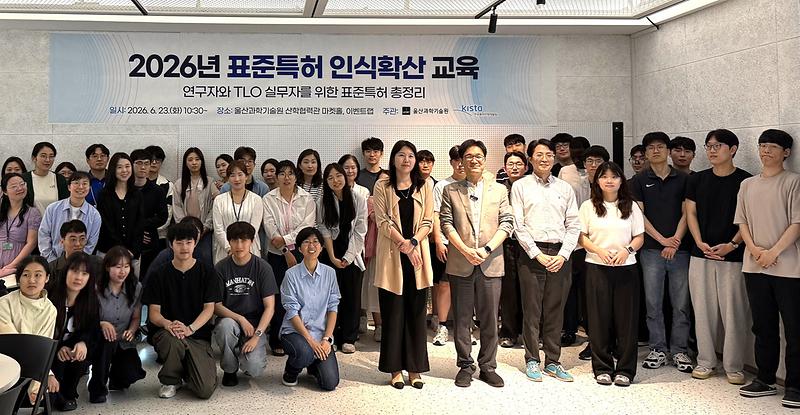
UNIST Expands Support for Standard-Essential Patent StrategyNew initiative with KISTA helps researchers incorporate international standards and intellectual property strategy into research planning.JooHyeon HeoStandard-essential patents (SEPs) are playing an increasingly important role as international standards shape global technology competition. To help researchers respond to this shift, UNIST has launched its first university-wide training session on SEPs and intellectual property (IP) strategy. Organized by the UNIST Office of University Industry Relations and the Korea Intellectual Property Strategy Agency (KISTA), the session brought together more than 150 faculty members, researchers, students, technology licensing professionals, and research support staff participated. Participants explored the fundamentals of SEPs, global trends across key technology sectors, and strategies for securing and commercializing SEP-related intellectual property. The training aims to strengthen the global competitiveness of UNIST research by encouraging researchers to consider international standards alongside R&D planning. Researchers participating in a national IP-R&D program for next-generation nuclear technologies also attended the training, reflecting growing interest in standards-based research across diverse scientific fields. Demand exceeded expectations, prompting UNIST to open an additional lecture room and provide a live simulcast to accommodate participants. The training also marked the first joint educational initiative between UNIST and KISTA's Standard Patent Center. Bringing together researchers and technology transfer professionals, it highlighted how standards and intellectual property strategy can be incorporated throughout the innovation process—from early-stage research to technology commercialization. “Standard-essential patents are becoming a critical form of intellectual property in global technology competition,” said Youngsik Kim, Director of the UNIST Office of University Industry Relations. “We will continue expanding support to encourage researchers to consider international standards from the earliest stages of R&D and strengthen the foundation for creating globally competitive research outcomes.” UNIST plans to expand SEP education for researchers and technology transfer professionals while deepening its collaboration with KISTA on standards strategy and related initiatives.- 2026.06.27
- 3340